Research

I work where human–computer interaction meets software engineering: immersive technologies and serious games for health, the privacy and security of those systems, and how developers work alongside AI. I pair user-centred evaluation with empirical software engineering methods. I also work on parallel algorithms for large scheduling problems.

Current projects

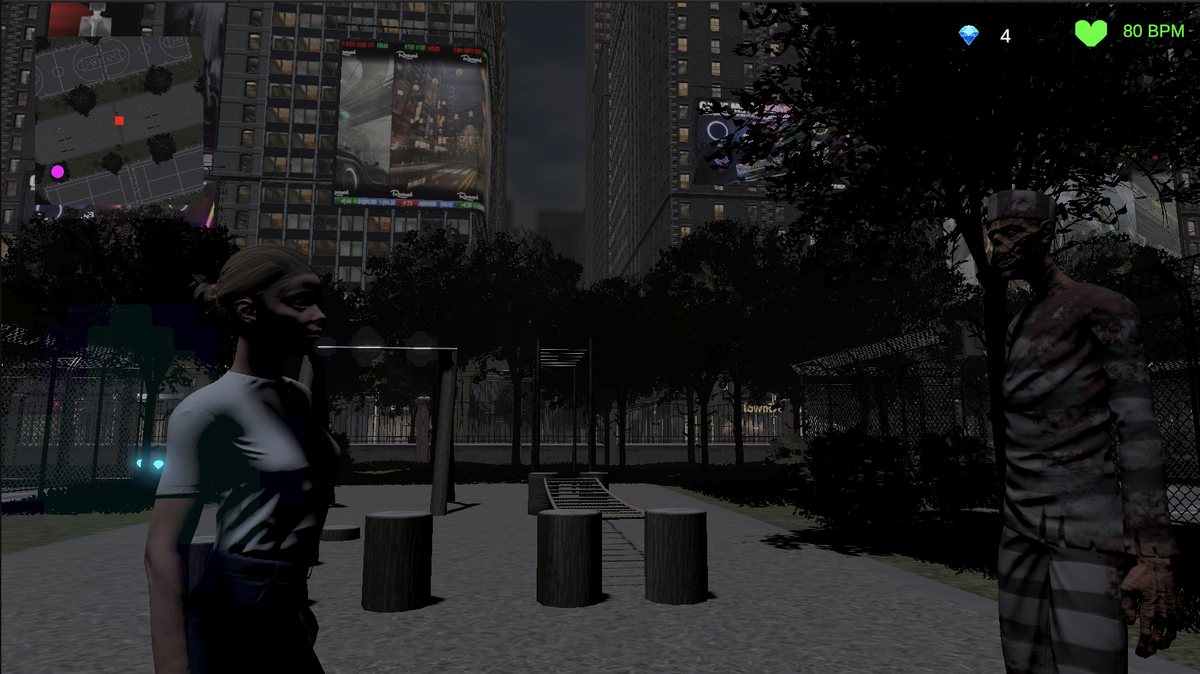
Desktop version of the germophobia game: a player in a night-time city park, with a live 80 BPM heart-rate readout and a minimap
HCIXRMS thesisIRB-approved

Gamified VR and Android Exposure Therapy for Germophobia

Supervisor: Dr. Farjana Z. Eishita, Idaho State University

A serious game that delivers graded exposure therapy for germophobia. The desktop and Android versions are built, and the VR version is in development. The game syncs with the player’s heart rate in real time through a smartwatch, and branching player choices change how elements of the environment respond. We will evaluate it in an IRB-approved user study.

  • Unity
  • C#
  • Android SDK
  • Smartwatch heart-rate sync
  • Firebase
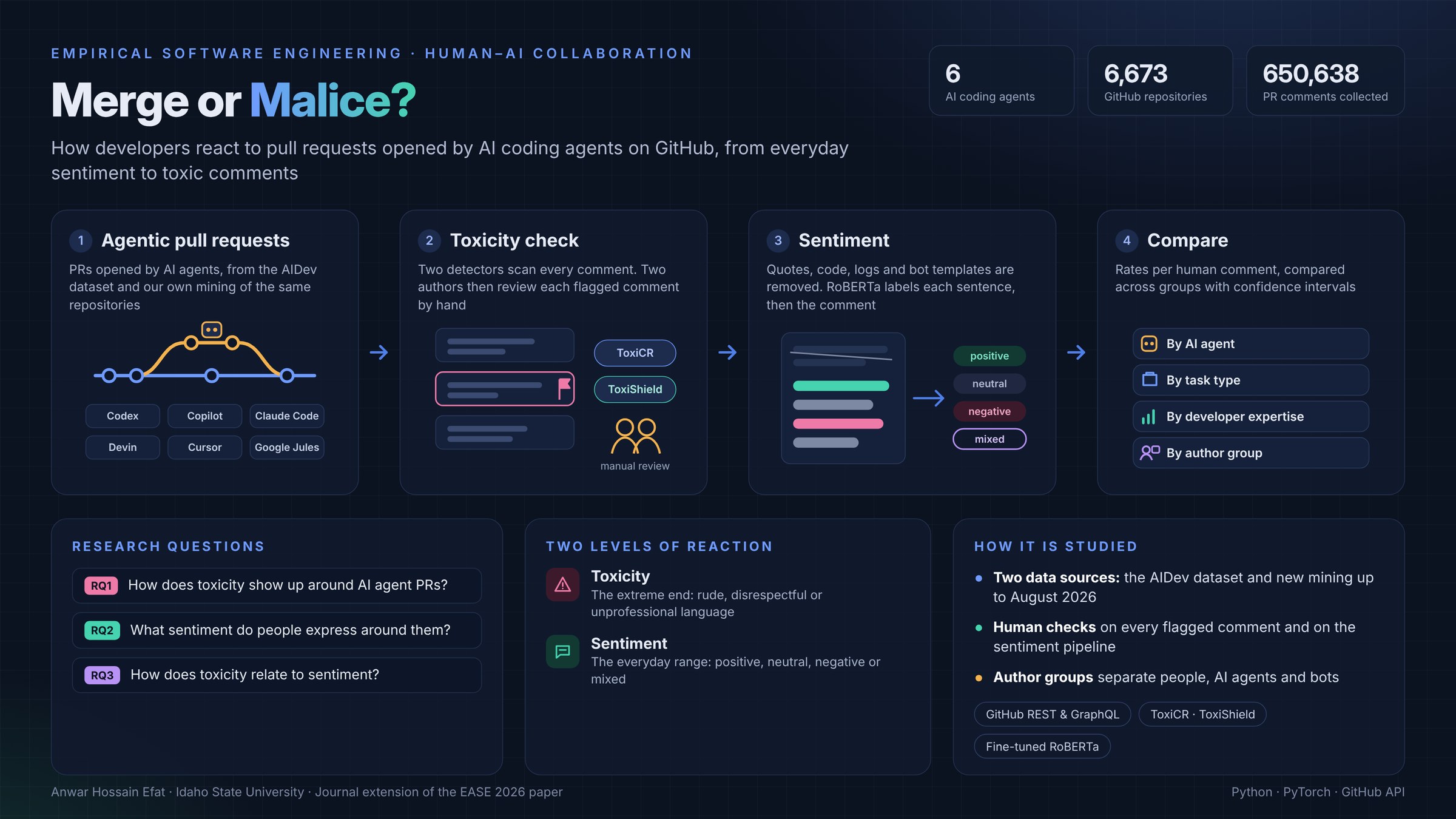
Study overview: agentic pull requests from six AI coding agents, a toxicity check with two detectors and manual review, sentence-level sentiment with RoBERTa, and comparisons across agents, task types, expertise and author groupsView full size
SEIn preparation

Merge or Malice? Toxicity and Sentiment Around AI Agent Pull Requests

Advisor: Dr. Minhaz F. Zibran, Idaho State University

AI coding agents such as OpenAI Codex, GitHub Copilot, Claude Code, Devin, Cursor and Google Jules now open pull requests on real projects. Our EASE 2026 paper studied toxic comments around them. The invited journal extension for Information and Software Technology studies two levels of reaction on a much larger dataset: toxicity, found with two detectors and a manual review of every flagged comment, and everyday sentiment, classified with a fine-tuned RoBERTa model.

  • GitHub REST & GraphQL APIs
  • ToxiCR
  • ToxiShield
  • RoBERTa
  • Python
  • PyTorch
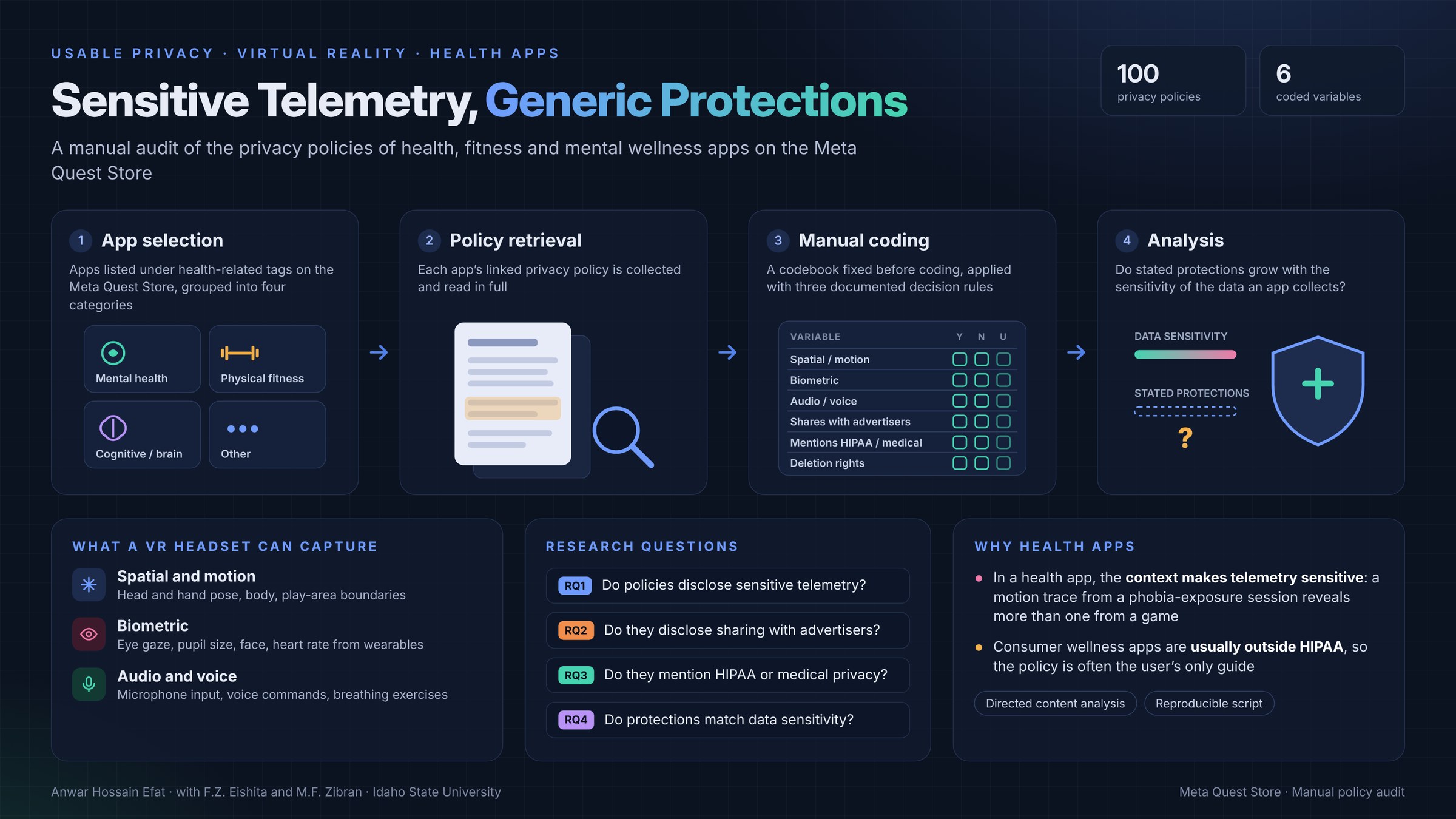
Study overview: app selection on the Meta Quest Store, policy retrieval, manual coding with a six-variable codebook, and analysis of whether protections match data sensitivityView full size
XRSECUnder review

Sensitive Telemetry, Generic Protections

A manual audit of the privacy policies of health, fitness, and mental wellness apps on the Meta Quest Store

VR headsets can capture body movement, gaze, voice, and health-related signals. We read the privacy policies of 100 health, fitness, and mental wellness apps on the Meta Quest Store and coded each one with a six-variable codebook: what sensitive telemetry it collects, whether it shares data with advertisers, whether it mentions HIPAA or medical privacy, and whether users can delete their data. The study asks whether stated protections match the sensitivity of the data. It builds on our systematic literature review of cybersecurity threats in VR games (ICCSIT 2026).

  • Directed content analysis
  • Codebook design
  • Statistical analysis
  • Python
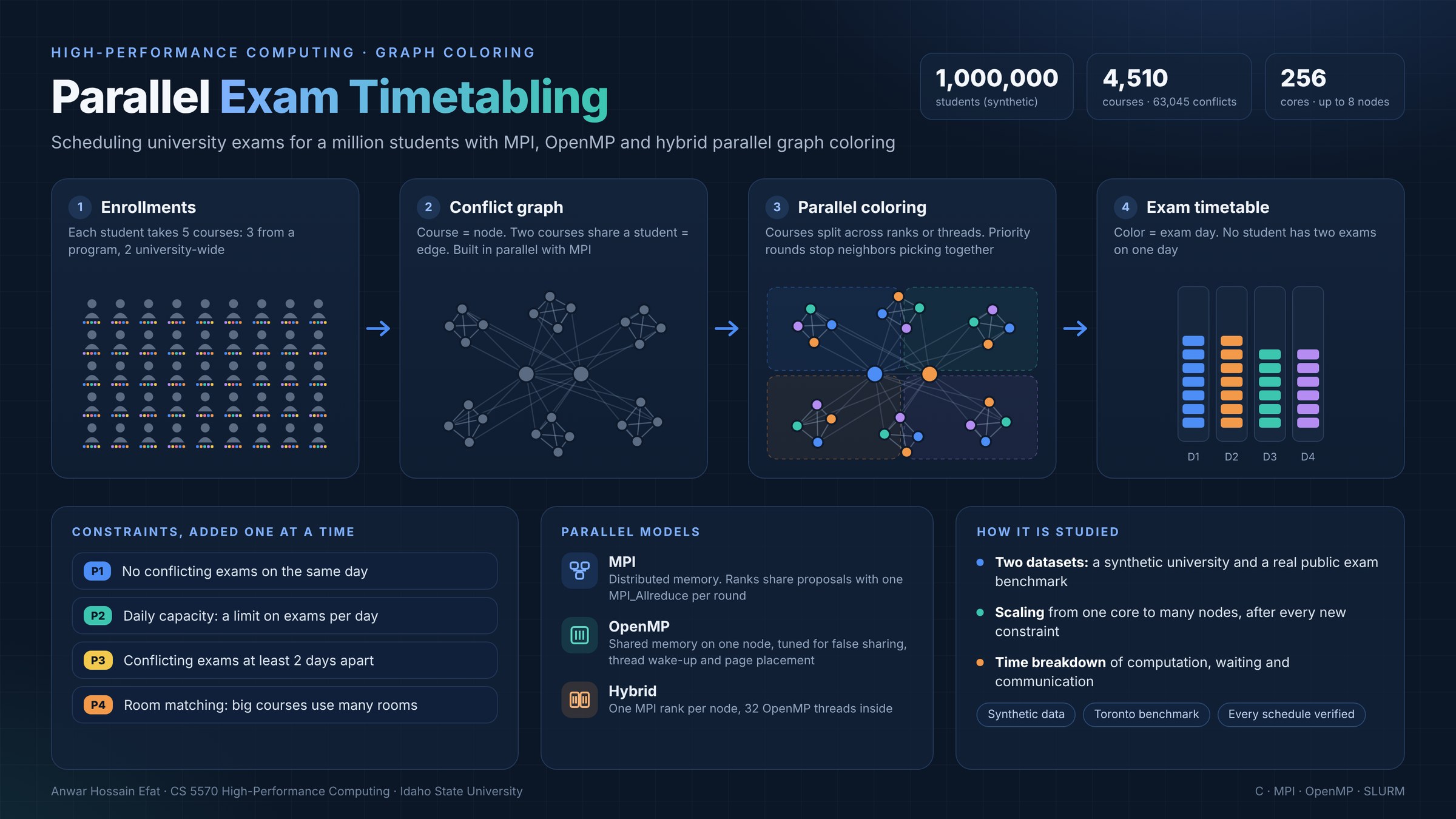
Project overview: student enrollments, a course conflict graph, parallel colouring across ranks, and the resulting exam timetable, with four constraints and three parallel modelsView full size
HPCPaper in preparationBegan in CS 5570

Parallel Exam Timetabling with Graph Colouring

Scheduling university exams for a million students with MPI, OpenMP, and hybrid parallel graph colouring

Courses become nodes in a conflict graph, and colouring the graph assigns exam days so no student has two exams on the same day. The solver runs with MPI, OpenMP, and a hybrid of both. Four constraints are added one at a time: no conflicts on the same day, a daily capacity, at least two days between conflicting exams, and room matching. After each one, we measure scaling from one core to many nodes and break the run time into computation, waiting, and communication, on a synthetic university of one million students and on the Toronto benchmark. Every schedule is verified.

  • C
  • MPI
  • OpenMP
  • SLURM
  • Up to 256 cores

Methods

HCI and user research
Usability evaluation, design of IRB-approved user studies, real-time physiological (heart-rate) sensing in games. CITI-certified in human subjects research (training)
Empirical software engineering and security
Mining software repositories, toxicity and sentiment analysis of developer discussions, systematic literature reviews, manual privacy-policy audits
Data analysis
Statistical analysis, machine learning and explainable AI experiments

Earlier work

Before moving into HCI and software engineering, I worked on machine learning, computer vision, and explainable AI for medical diagnosis. Most of that work designed attention-based deep ensembles for skin lesion classification, published in journals such as PLOS ONE, IEEE Access, Digital Health, and Machine Learning with Applications. I also built interpretable models for disease prediction and for understanding student outcomes. One of these papers received a Best Paper Award at ICISET 2024.

See the full publication list →